Historical Reflection
Focus: How can one site reveal centuries of political, religious, and social change?
A Visit to Aragonese Castle, Ischia
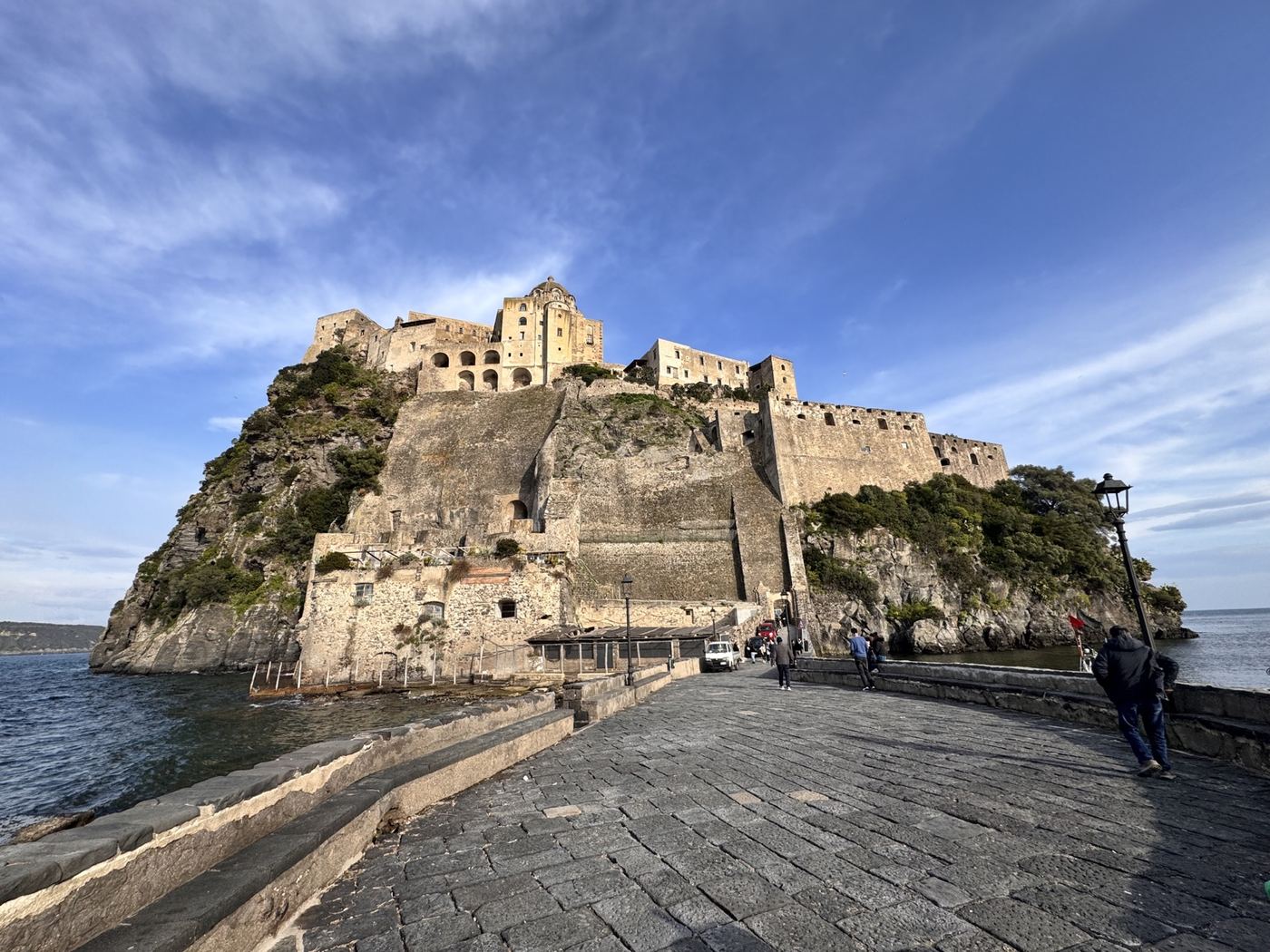
My visit to the Aragonese Castle in Ischia made me realise how one place can reflect centuries of political, religious and social change. As soon as I arrived, the position of the castle made its defensive purpose obvious, but walking through it also showed how much its role had changed over time.
One of the most interesting things was the way the castle reflected changing power. It started as a fortress, then became a refuge during pirate attacks, and later even a prison under the Bourbons. That stood out to me because the castle was clearly not limited to one purpose, and its role kept changing with the pressures of each period.
Power and adaptation
The most striking thing about the castle was the way it combined military strength with later social and religious uses. Its position on a rocky islet immediately suggests defence, but the site did not remain fixed in that role. As I moved through the space, it became clear that the castle had been adapted over time as political pressures changed. That made the visit feel less like looking at a single monument and more like following a long history of survival and adjustment.
This made me think about how places can outlast the original purpose for which they were built. A fortress designed for protection could later become a place of refuge, administration, religion, or punishment. In that sense, Aragonese Castle reflects a wider historical pattern: buildings often survive by being reinterpreted and reused.
Religion and atmosphere
The religious side of the castle was also very clear. The churches and convent buildings showed that it was not just a military site but also a spiritual centre. The ruined church in particular made this feel especially real, as it showed both ambition and the impact of time and damage.
The thing I kept thinking about afterwards was the contrast between how peaceful the site feels now and how much conflict and control it once represented. Today, the castle feels calm and scenic, but its history includes conflict and control. That contrast made the visit more meaningful because it showed how historical places can preserve evidence of hardship even when they now appear peaceful and beautiful.
Why the visit mattered
Overall, visiting Aragonese Castle made history feel much more tangible because you can still see traces of all the different roles the site once had. It shows how one site can reflect different aspects of history over time, including power, religion and society. Visiting it made me think more carefully about how historical landscapes are layered and how the meaning of a place can change without its past ever fully disappearing.