Historical Reflection
Focus: How does Aga Khan Palace change the way we think about confinement, memory, and colonial power in India?
A Visit to Aga Khan Palace in Pune
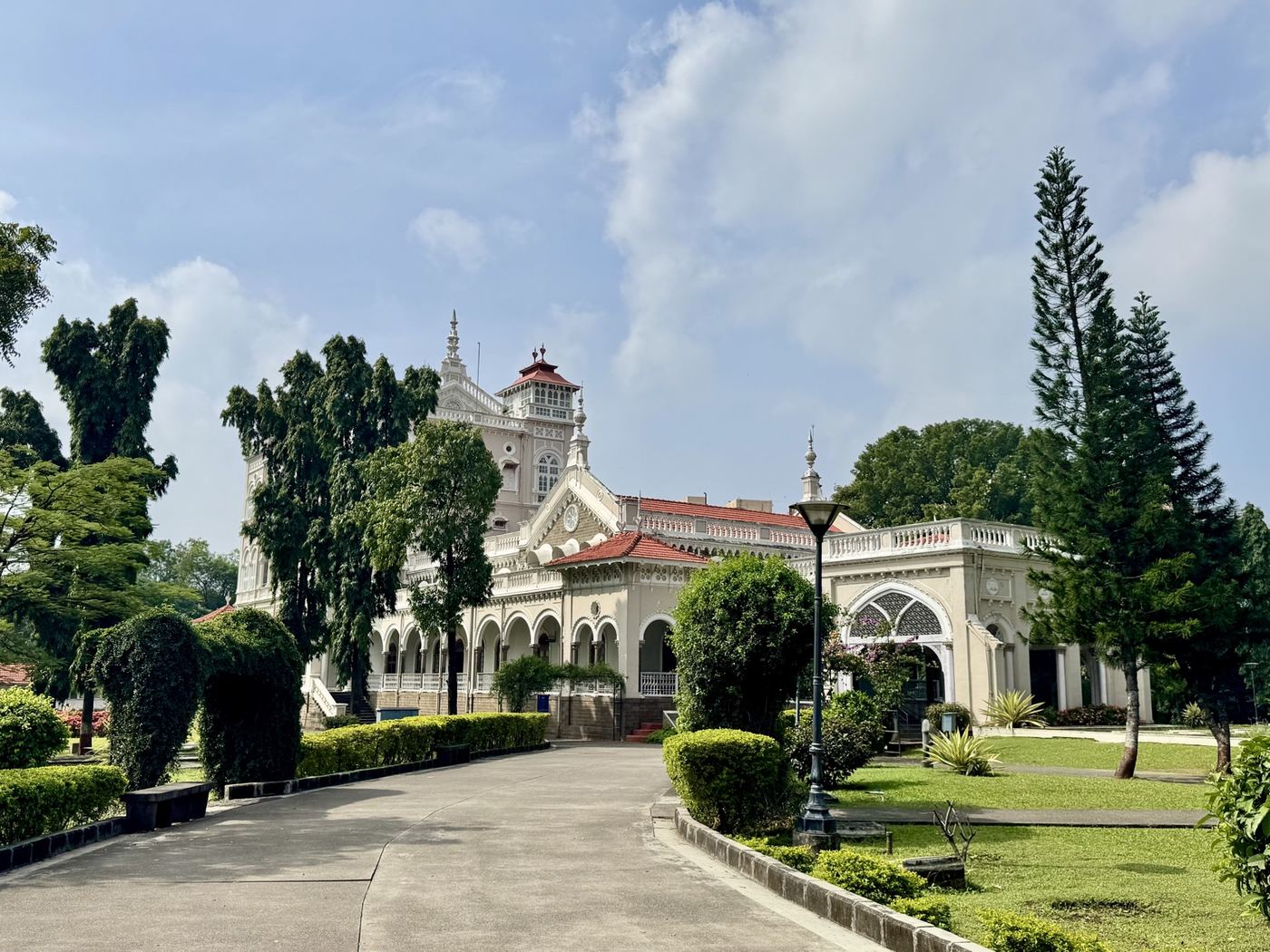
Visiting the Aga Khan Palace in Pune felt like more than just seeing a historical site. It felt like stepping into a place shaped by memory, politics, and sacrifice. What struck me most was the contrast between the peaceful grounds and the weight of the history connected to them. The palace is visually impressive, with its open gardens, long pathways, and grand architecture, but its importance goes far beyond how it looks.
Built in 1892, the Aga Khan Palace later became closely linked with the Indian nationalist movement, especially during the Quit India Movement of 1942. It was here that Mahatma Gandhi, Kasturba Gandhi, and Mahadev Desai were detained by the British. Knowing this changed the way I looked at the building. At first it appears elegant and peaceful, but when you think more carefully about its history, it becomes a place connected with confinement, political struggle, and personal loss.
Confinement in a place of calm
What I found most interesting was the contradiction between the openness of the palace and its role as a place of detention. The large gardens and open spaces create a sense of freedom, yet this was also a site where movement and political action were restricted. That contrast made me think more deeply about the site rather than just admire it.
Why was this confinement so calm and controlled when many ordinary Indians experienced much harsher treatment under colonial rule? One possible explanation is Gandhi’s status. By the time he was detained, he was not just a political activist but a widely recognised and respected figure in India and abroad. It seems likely that the British understood that openly brutal treatment of Gandhi would attract even more criticism and could intensify resistance. In that sense, the palace shows that colonial authority was not always applied in the same way. The treatment of individuals could depend on their public influence and on the political consequences of how power was used.
A place of memory as well as politics
Inside the palace, the displays and memorial spaces gave the visit a more personal side. Rather than only presenting major political events, the site also draws attention to the human cost of the independence struggle. This mattered because it stopped the story from feeling too distant or abstract. Seeing the interior displays made the experience feel more immediate, and it became easier to think about the individuals behind the movement rather than only the larger story of national change.
The memorial atmosphere of the site also made me think about how history is preserved. Aga Khan Palace is important not only because something happened there, but because it now presents that history to visitors. It turns a former place of detention into a place of remembrance, and that change is historically meaningful. It shows how sites once linked to control can later become places of reflection and national memory.
Why the visit stayed with me
What stayed with me most was how the palace encourages interpretation. It is not just a building to look at, but a place that makes you reflect on how history is experienced and remembered. For me, that is one of the most interesting parts of studying history more broadly: not only learning what happened, but thinking carefully about how spaces, people, and events connect.
Overall, my visit to the Aga Khan Palace made me reflect on the relationship between architecture, memory, and political history. The site combines visual grandeur with a much deeper historical significance, and that contrast is what makes it so striking. It left me thinking not only about India’s struggle for independence, but also about the different ways historical places can shape how we understand the past.