Historical Reflection
Focus: How do two sites within walking distance of each other construct entirely opposing models of collective memory?
The Golden Temple and Jallianwala Bagh: The Differences of Memory Preservation
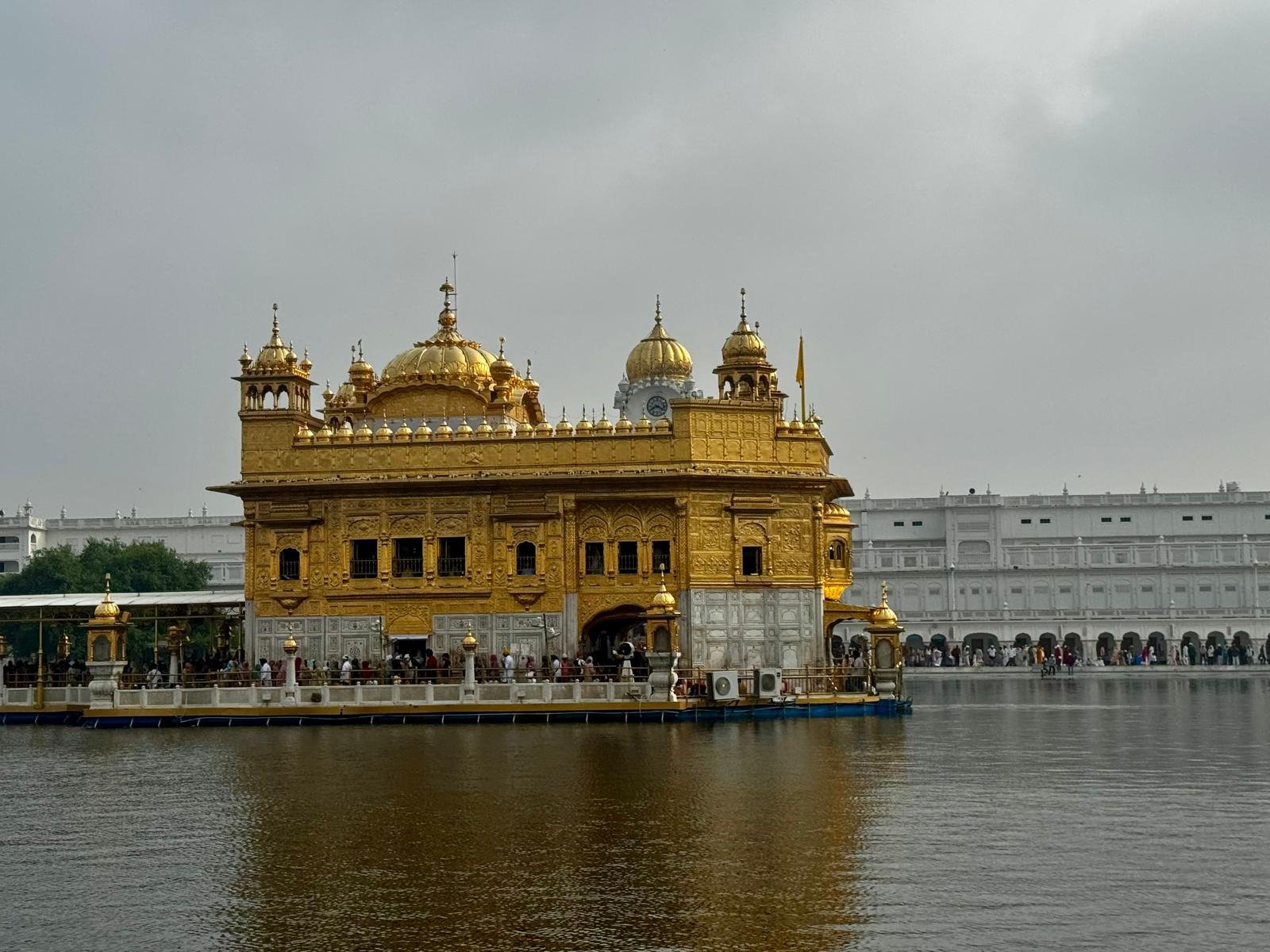
To enter Amritsar is to step into a landscape where the physical environment operates as a direct engine of collective memory. Urban spaces are rarely neutral; instead, they serve as ideological blueprints that structure how societies inherit, process, and perform their histories. This dynamic is vividly illustrated by the stark spatial dialectic between the Golden Temple and the Jallianwala Bagh memorial. Located just a short walk apart, these two landmarks construct entirely opposing models of remembrance. While the Golden Temple serves as the architectural epicentre of Sikh spiritual continuity, community sovereignty, and theological resilience, Jallianwala Bagh enforces a static, linear, and deeply traumatic historical memory of colonial violence. By examining the architectural configurations and visitor interactions at both sites, we can understand how Amritsar functions as a living archive that balances deep-seated religious identity against state-inflicted tragedy.
The Harmandir Sahib embodies what theorists call “living memory,” a past that is not locked away in a textbook but is continuously reenacted through the foundational tenets of Sikhism. Architecturally, the temple is designed to facilitate a physical manifestation of Sikh philosophy. Sitting lower than the surrounding city streets, it requires visitors to literally step down to enter, mirroring the core Sikh value of humility by stripping away secular and caste hierarchies before one even reaches the threshold. The four entrances, facing each cardinal direction, explicitly represent the faith’s rejection of the rigid caste system, signalling a collective memory built on radical inclusivity, egalitarianism, and universal access. Here, memory is sustained through sensory and ritualistic repetition. The synchronised, non-stop chanting of the Gurbani, the reflective expanse of the Amrit Sarovar (the pool of nectar), and the shared consumption of Langar (the communal meal) turn abstract spiritual history into a daily, somatic experience.
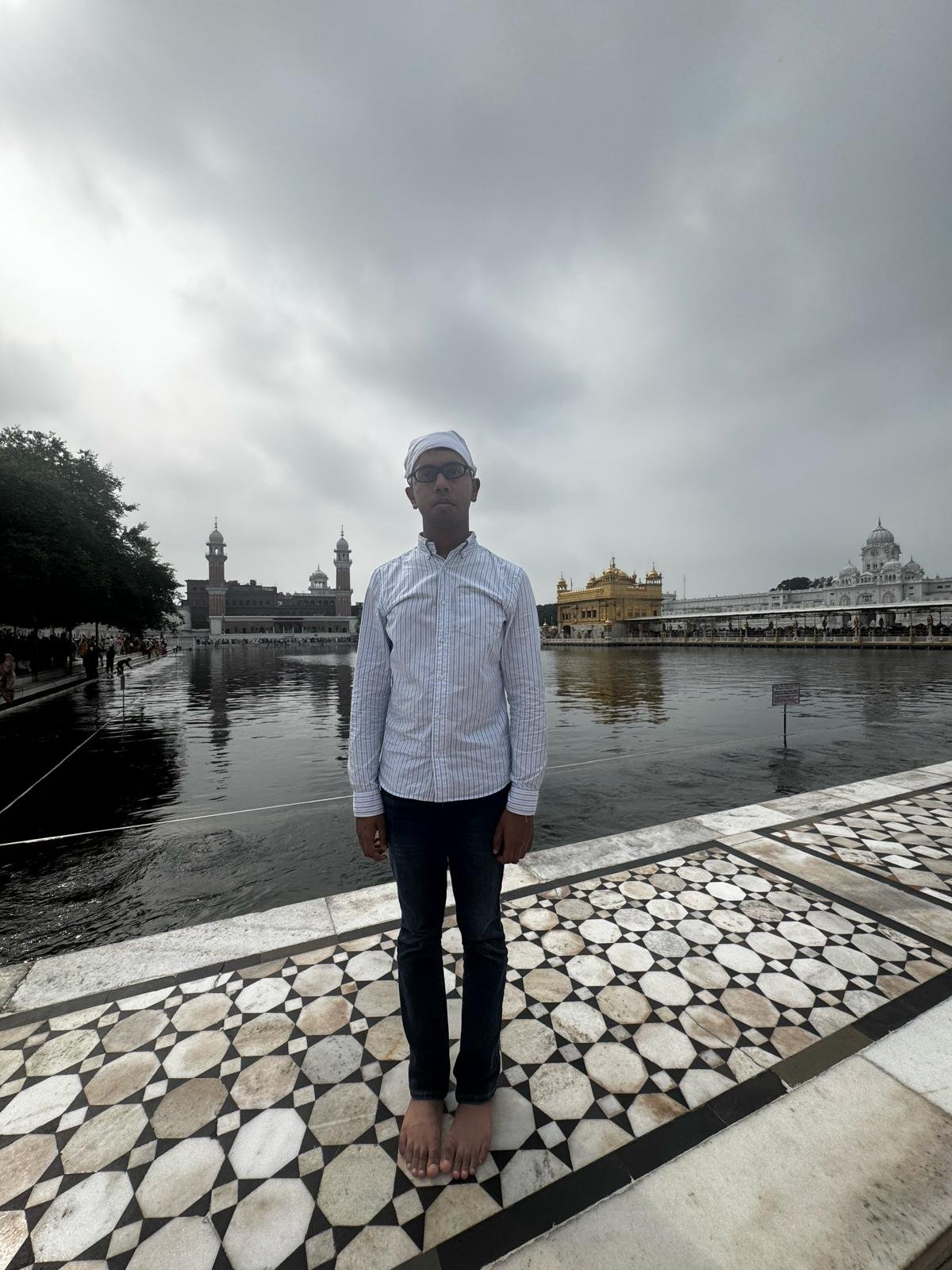
Furthermore, the Golden Temple must be understood as the historical anchor of Sikh survival. The site itself has survived multiple desecrations and demolitions throughout history, yet it has always been rebuilt. Thus, the physical structure of the Harmandir Sahib is a monument to Chardi Kala, the eternal optimistic spirit and resilience central to Sikh identity. The memory preserved here is not one of victimhood, but of endurance and spiritual sovereignty, conceptualised visually by the adjacent Akal Takht. The memory of the Golden Temple is fluid and regenerative; it uses the continuity of ritual to heal historical fractures and sustain a resilient, sovereign cultural identity across generations.
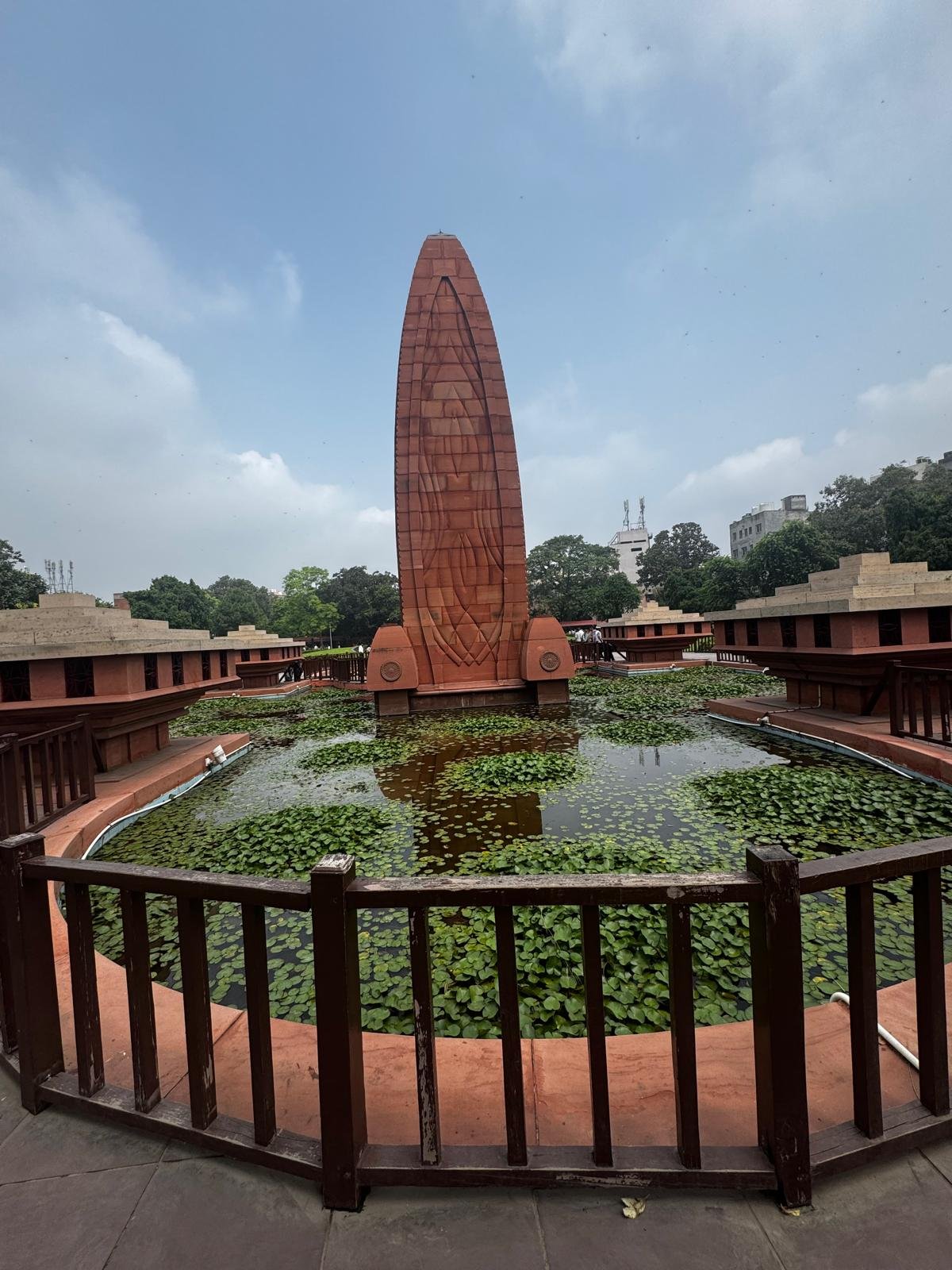
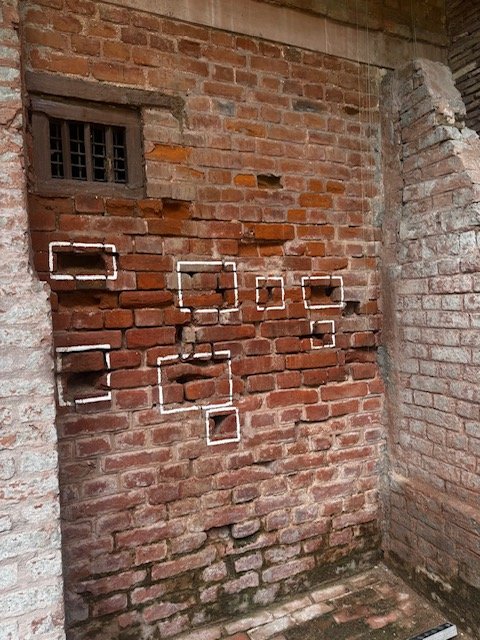
In sharp contrast, Jallianwala Bagh operates as an architectural container of arrested trauma, freezing a single catastrophic moment in time to construct a national counter-narrative against colonial amnesia. On April 13th 1919, Brigadier-General Dyer ordered troops to fire on a peaceful gathering celebrating the Sikh festival of Vaisakhi, killing hundreds. Today, the spatial layout of the site forces the modern visitor to kinesthetically re-experience the claustrophobia of that day. The entrance is a notoriously narrow, suffocating brick alleyway, the exact bottleneck that prevented the crowd from escaping the gunfire. By narrowing the point of entry, the architecture immediately strips the visitor of comfort, priming them to confront violence. Within the park, the physical scars of the event are aggressively preserved. The red brick walls, punctuated by white squares framing the original bullet holes, serve as graphic punctuation marks in a narrative of state terror. Similarly, the Martyrs’ Well is enclosed, transforming a site of mass panic and death into a monument of sacrifice.
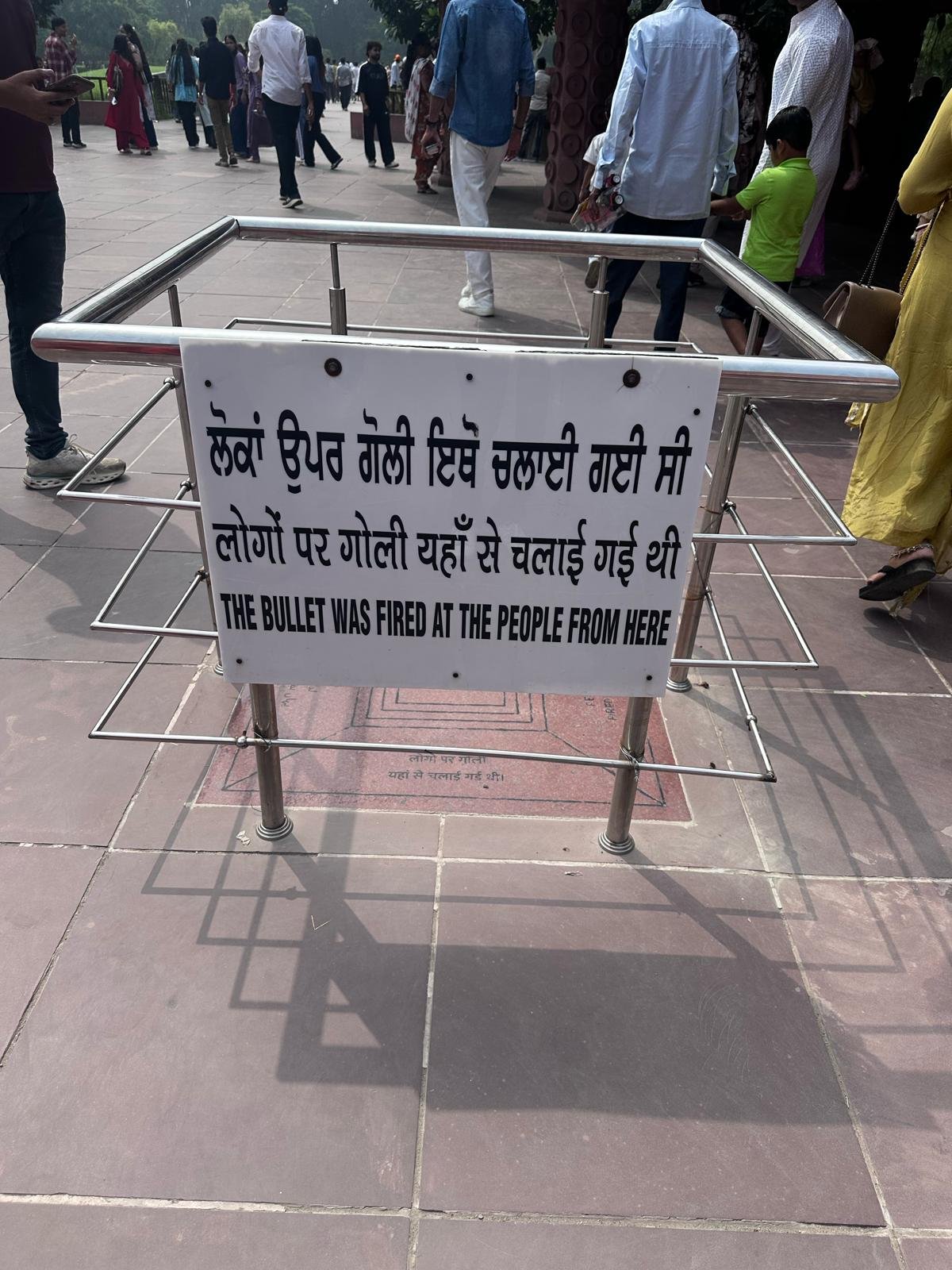
This preservation highlights a fundamental tension in how we curate difficult histories: Jallianwala Bagh does not seek to heal, but rather to wound and remind. While the Golden Temple uses water, open space, and continuous sound to dissolve time, the Bagh uses brick and iron cages to trap it. The visitor to the memorial is not a participant in a living ritual, but a witness to a historical crime scene. Interestingly, for the Sikh community, this trauma is often absorbed into the broader, existing framework of martyrdom, viewing the tragedy not just as a political event, but as part of a long historical continuum of sacrifices made for justice.
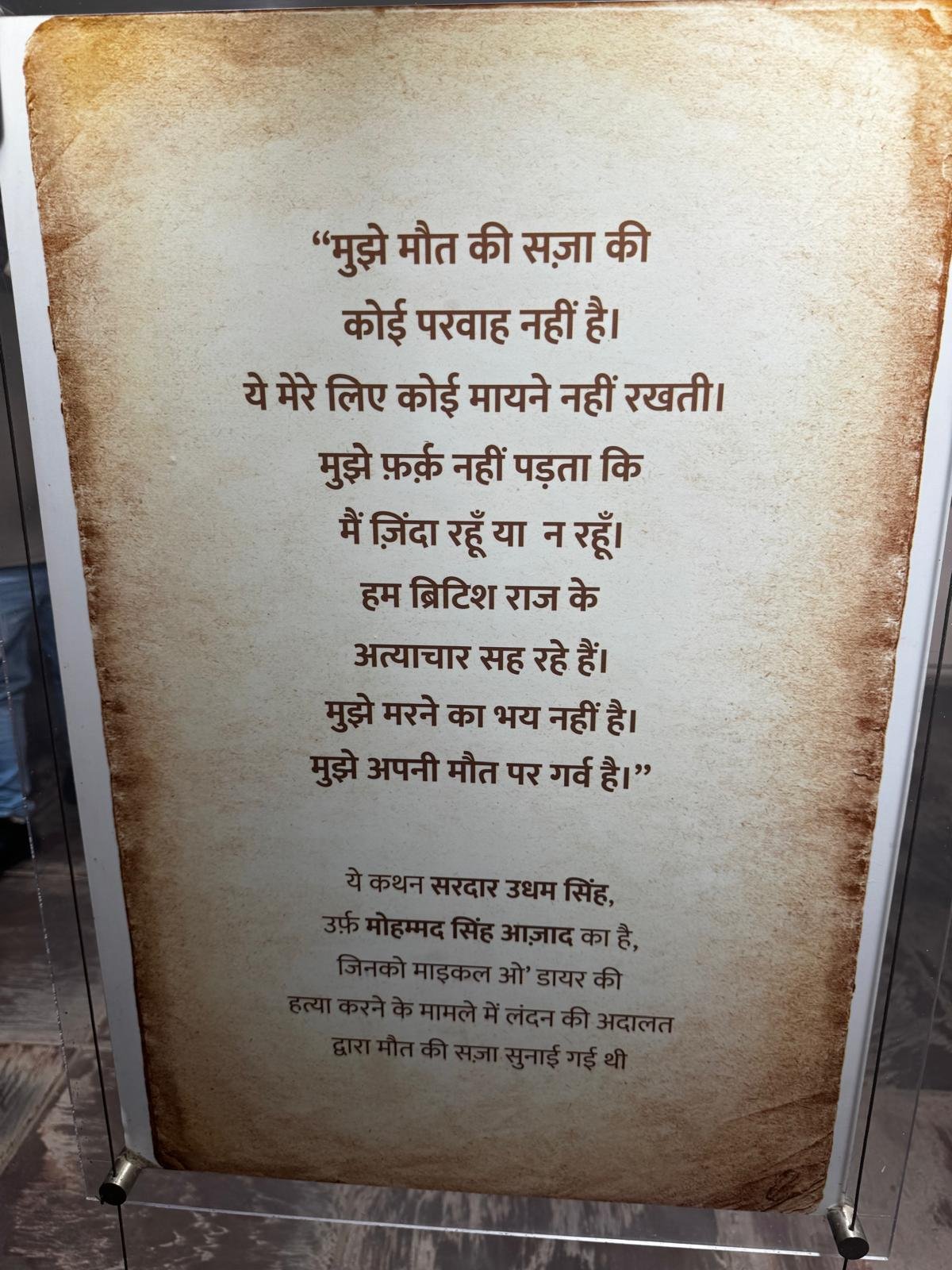
Ultimately, walking the short distance between these two sites reveals the dialectical nature of human memory. Amritsar does not allow its history to be one-dimensional. Through the Golden Temple, the city remembers how to endure, using Sikh theology and spiritual repetition to look forward into the future. Through Jallianwala Bagh, the city remembers what it lost, using architectural trauma to anchor itself firmly to the hard truths of the past. Together, these spaces prove that memory is not merely a cognitive act, but a geographic one. We do not just remember with our minds; we remember through the walls we build, the water we touch, and the spaces we choose to walk through.